
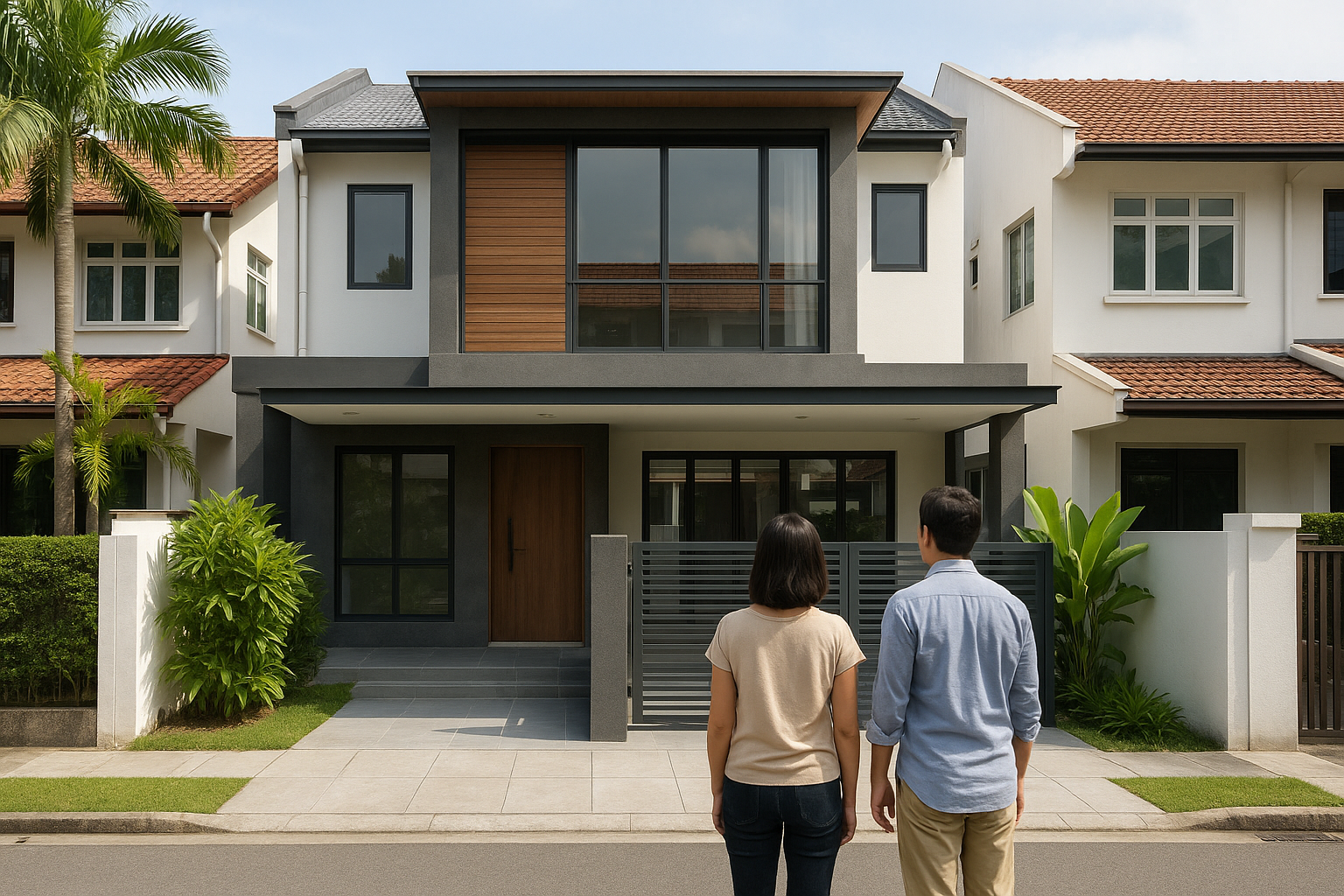
Transitioning from an HDB flat or a condominium to a landed property in Singapore is a major milestone. Unlike apartments, where the management corporation takes care of the roof, external façade, and shared amenities, owning landed property means you take 100% responsibility for the land and the building. Whether you are eyeing a terrace, semi-detached house, bungalow, or a Good Class Bungalow (GCB), rigorous due diligence is non-negotiable.
This comprehensive 2026 guide by Team Miracles Landed (TML) explores what you must check before buying landed property in Singapore, ensuring your next move is both secure and sound.
1. Land Tenure and Ownership Eligibility
Before falling in love with a driveway or high ceilings, verify ownership eligibility and land tenure. These two factors dictate who can buy the property and how its value will hold over time.
Freehold vs. Leasehold (99-year and 999-year)
- Freehold & 999-year Leasehold: Generally command a premium. They are perceived to hold long-term legacy value better, though initial capital outlay is higher.
- 99-year Leasehold: Common in government-released landed estates (such as certain plots in Serangoon Garden or premium landed zones). Pay close attention to the remaining lease. A lease below 60 years can complicate bank financing and future resale liquidity.
Singapore Citizenship and Restrictions
Under the Residential Property Act, landed properties (excluding those in approved foreigner-eligible enclaves like Sentosa Cove) are restricted. Generally, only Singapore Citizens can own landed residential properties. Permanent Residents (PRs) must seek special approval from the Singapore Land Authority (SLA), which is granted selectively based on economic contribution and exceptional merits.
2. Land Title, Boundaries and Encumbrances
Never rely solely on visual boundaries like fences or hedges. Professional verification of the land title is critical.
- SLA Land Title Search: Conduct a title search via Singapore Land Authority services to confirm the registered owner, encumbrances (mortgages, caveats, or charges), and easements (rights of way that allow neighbours to cross your land).
- Registered Boundary vs. Actual Boundary: Engage a registered land surveyor to verify that the physical fences match the cadastral survey map. Encroachments onto state land or neighbouring plots can lead to costly legal disputes and forced demolitions.
3. URA Planning and Redevelopment Restrictions
Many buyers purchase landed properties with the intention to modernise them. However, what you can build is strictly governed by the Urban Redevelopment Authority (URA) and the BCA (Building and Construction Authority).
- Master Plan Zoning: Check if the plot is zoned for landed residential use only, or if it is subject to specific envelope control guidelines (which govern the maximum height and number of storeys, typically two or three storeys depending on the landed housing area).
- Road Line Buffer and Drainage Reserves: Some plots are affected by road line reserves or drainage reserve lines. Part of your land may be slated for future public infrastructure acquisition by the state, restricting what you can build in those zones.
4. Building Condition and Structural Risks
Landed homes vary wildly in age. A charming heritage terrace house might hide decades of wear and tear.
Key Structural Elements to Inspect
- Foundation and Piling: Check for differential settlement, severe wall cracks, or sinking car porches.
- Roof and Waterproofing: Inspect for timber rot, roof tile displacement, and chronic water seepage, especially in older inter-terrace units sharing common party walls.
- Electrical and Plumbing Systems: Homes older than 20 to 30 years often require complete rewiring and replumbing to support modern high-capacity electrical appliances and air-conditioning systems.
5. Renovation versus A&A versus Rebuilding
Knowing the difference between minor renovation, Addition & Alteration (A&A), and total reconstruction will save you time, money, and regulatory headaches.
- Renovation: Involves interior cosmetic work, changing bathroom tiles, or hacking non-structural walls. Does not significantly alter Gross Floor Area (GFA) or building envelope.
- A&A (Addition and Alteration): Involves extending the floor area (subject to planning rules) or adding a mezzanine, provided that at least 50% of the existing structural walls and external walls remain.
- Rebuilding: Hacking down the entire structure and building from scratch. This requires full QP (Qualified Person / Architect / Engineer) involvement, BCA structural plan approvals, and compliance with the latest URA envelope control guidelines.
For specific micro-market insights on rebuilding, refer to our detailed D19 landed rebuild buyer guide.
6. Purchase Costs, BSD and ABSD
Buying landed property involves heavy upfront capital in addition to the purchase price.
- Buyer’s Stamp Duty (BSD): Tiered progressive rates apply to the purchase price or market value, whichever is higher. High-value landed properties face top-tier BSD rates.
- Additional Buyer’s Stamp Duty (ABSD): Singapore Citizens purchasing their first residential property pay 0% ABSD, but second and subsequent property purchases incur significant ABSD rates. PRs and foreigners face higher baseline ABSD rates. Always calculate your exact ABSD liability before committing.
- Other Fees: Legal fees, property tax (calculated on Annual Value), stamp duty on mortgage loans, and professional survey/inspection fees.
7. Financing and Affordability
Securing a mortgage for landed property differs from HDB or condo financing.
- TDSR (Total Debt Servicing Ratio): Your monthly debt obligations cannot exceed 55% of your gross monthly income, assessed based on a medium-term interest rate stress test.
- Valuation Discrepancy: Banks conduct independent valuations. If the seller’s asking price is higher than the bank’s valuation, you must pay the Cash-Over-Valuation (COV) entirely in cash.
- CPF Usage Limits: Understand the CPF withdrawal limits and Property Withdrawal Limits based on the remaining lease of the property.
8. Location and Estate Intelligence
Landed living is deeply tied to micro-location factors.
- Accessibility: Distance to MRT stations, expressway entrances, and arterial roads.
- Amenities: Proximity to reputable primary schools (crucial for balloting phases), supermarkets, and lifestyle hubs.
- PEnvironmental Factors: Check for low-lying areas prone to flash floods, proximity to places of worship, main roads, or flight paths that might introduce noise pollution.
9. TML 5P Pre-Purchase Risk & Potential Check
To streamline your evaluation, Team Miracles Landed utilizes the proprietary TML 5P framework:
- Plot: Shape, frontage, width, orientation, elevation, and terrain stability.
- Property: Physical condition, layout efficiency, age, construction quality, and party wall integrity.
- Potential: Redevelopment headroom, URA GFA utilization, subdivision feasibility (for large plots), and A&A capacity.
- Position: Micro-location, quietness, proximity to MRT/schools, traffic flow, and future neighbourhood master plan transformations.
- Price: Historical transacted prices, recent comparable sales, bank valuation safety margin, and quantum reasonableness.
Learn more about our methodology at our dedicated TML 5P landed intelligence page.
10. Comparison Checklist for Shortlisted Houses
When comparing multiple landed options, use this structured comparison matrix:
| Evaluation Criteria | Property A (e.g., Terrace) | Property B (e.g., Semi-D) | Property C (e.g., Detached) |
|---|---|---|---|
| Tenure | Freehold | 99-year (65 yrs left) | Freehold |
| Land Size / Built-up | 1,800 sq ft / 2,400 sq ft | 2,800 sq ft / 3,200 sq ft | 4,500 sq ft / 5,000 sq ft |
| Orientation | North-South (Minimal sun) | West-facing (Warm) | East-facing (Morning sun) |
| Condition | Move-in ready | Needs A&A | Original (Needs Rebuild) |
| Bank Valuation vs. Ask | Matches asking price | COV required ($100k) | Matches asking price |
| School Proximity | Within 1km of top school | Beyond 2km | Within 1km of top school |
Frequently Asked Questions
1. Can foreigners buy landed property in Singapore?
Generally, no. Foreigners (including PRs in most cases) are not allowed to purchase landed residential properties unless they obtain specific approval from the Singapore Land Authority (SLA). The exception is Sentosa Cove, where foreign nationals may purchase landed properties subject to regulatory approval.
2. How do I know if a landed house can be rebuilt into 3 storeys?
You must check the URA Master Plan zoning and landed housing area guidelines for the specific estate. Most designated landed zones allow up to 3 storeys, but envelope control guidelines, building height restrictions, and road buffer setbacks apply. Consult an architect or review our landed buyer intelligence portal.
3. What is Cash-Over-Valuation (COV) in landed transactions?
COV is the cash amount a buyer must pay the seller if the agreed purchase price exceeds the independent valuation assigned by the buyer’s bank. Because landed properties are unique and transacted less frequently than HDBs or condos, valuation discrepancies can occur.
4. When should I engage an architect or structural engineer?
You should engage a professional Qualified Person (QP) before making an offer if you intend to carry out major A&A or a complete rebuilding project, or if you notice severe structural defects during your initial viewing.
5. How long does a landed property purchase process take?
A typical private residential property transaction in Singapore takes about 8 to 12 weeks from the exercise of the Option to Purchase (OTP) to completion, assuming bank financing and legal paperwork proceed smoothly.
Conclusion and Professional Next Steps
Buying a landed property is an exciting journey that requires balancing emotional aspirations with hard-headed technical and financial due diligence. From verifying land titles and checking URA planning constraints to calculating ABSD and assessing structural risks, every detail matters.
If you are ready to navigate the Singapore landed property market with confidence, connect with our specialist consultants. Explore our resources or get in touch directly via our contact us page for tailored advisory.