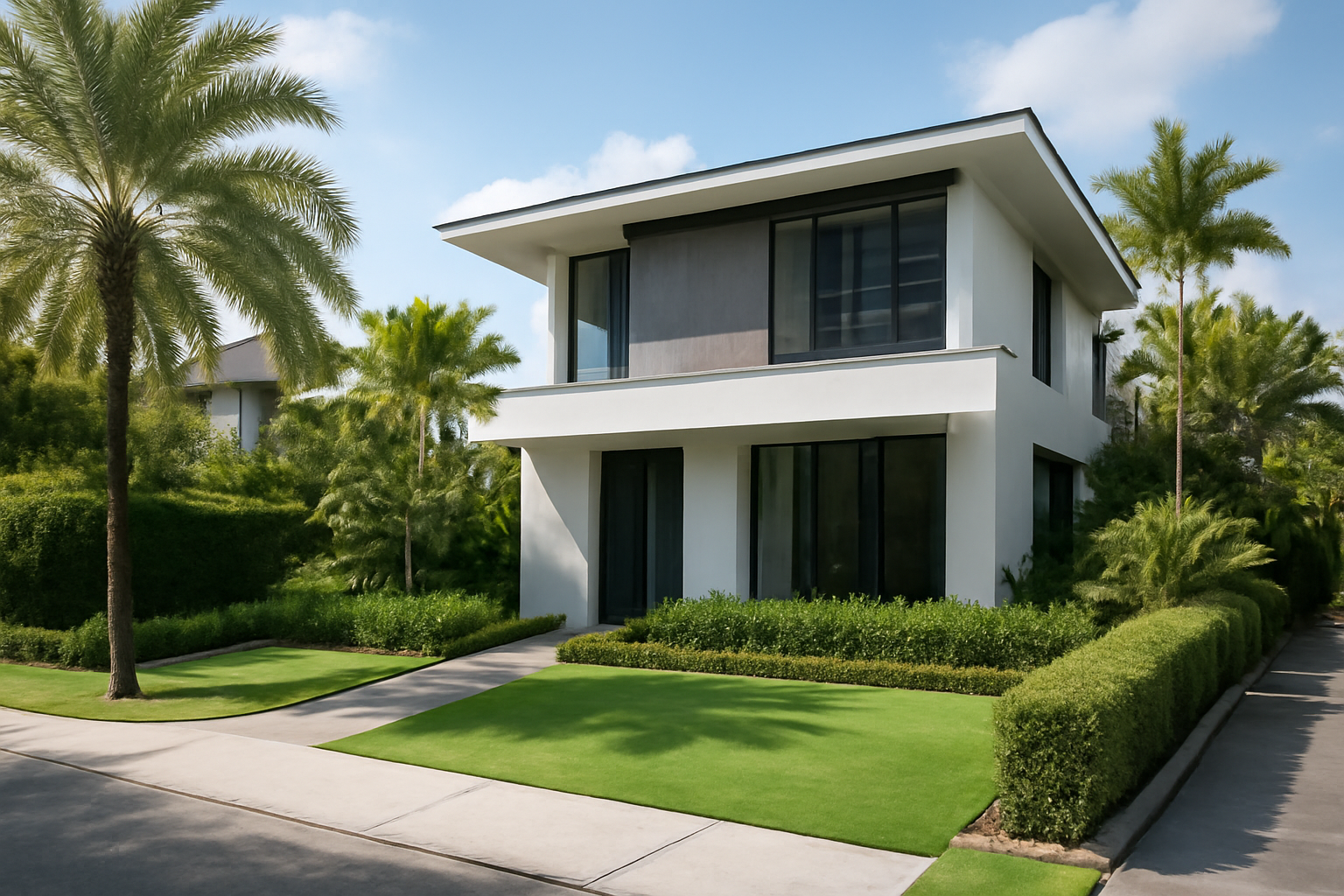


Determining the best time to sell landed property Singapore depends on a strategic convergence of macroeconomic conditions, micro-market sentiment, individual property attributes, and your personal financial timelines. Unlike the mass condominium market, which experiences rapid liquidity and high-volume transactions, Singapore’s landed housing sector—comprising Good Class Bungalows (GCBs), detached houses, semi-detached homes, and terrace houses—operates on distinct fundamentals. Because landed properties represent scarce, freehold or 999-year leasehold land parcels in a land-scarce island-state, timing your exit requires a nuanced evaluation rather than relying solely on general property market headlines.
At Team Miracles Landed (TML), our Landed Intelligence Consultants often advise homeowners that the ideal moment to list is when your property’s intrinsic strengths align favourably with prevailing buyer demand. To help you navigate this intricate decision, this guide explores the seasonal rhythms of the property market, evaluates macro and micro indicators, outlines the TML 5P framework, and provides actionable checklists to ensure you achieve a successful transaction.
Understanding Market Cycles and Seasonality
Real estate activity in Singapore naturally ebbs and flows throughout the calendar year. While prime landed assets can transact in any month given their limited supply and high-net-worth buyer pool, understanding seasonal cycles can help you optimize your marketing launch.
The Rhythm of the Singapore Property Calendar
Traditionally, the Singapore residential property market experiences two peak selling windows each year: February to April (following the Chinese New Year lull and the release of annual bonuses) and September to November (after the mid-year school holidays and the Hungry Ghost month). During these periods, buyer viewing activity tends to rise as families look to secure homes before major school transitions or year-end relocations.
Conversely, the end of November and December, as well as June, see reduced foot traffic due to school holidays and overseas vacations. However, for exclusive landed segments, serious buyers are active year-round. Relying purely on seasonality is secondary to assessing broader economic cycles, interest rate trajectories, and cooling measures.
Macroeconomic and Regulatory Factors
Property sellers must stay attuned to broader economic shifts. Interest rate environments influence borrowing costs for landed buyers, even though many high-net-worth purchasers maintain substantial liquidity. Furthermore, government policies such as Additional Buyer’s Stamp Duty (ABSD) rates and Total Debt Servicing Ratio (TDSR) frameworks dictate market liquidity. Before listing, consult official regulatory portals such as the Urban Redevelopment Authority (URA) and the Inland Revenue Authority of Singapore (iras.gov.sg) to verify current tax frameworks and market transaction data.
Evaluating Timing Through the TML 5P Framework
Timing your sale is not just about the calendar; it is about readiness. TML champions the 5P framework—Plot, Property, Potential, Position, and Price—to help homeowners determine if their asset is primed for the market.
- Plot: The land attributes, frontage, width, orientation, and shape. Regular plots with wide frontages command higher demand. If your plot sits in a highly sought-after estate, market timing becomes less critical because scarcity drives perpetual interest.
- Property: The physical condition, layout, and age of the existing structure. A well-maintained house ready for immediate move-in appeals to multi-generational families, whereas a run-down structure attracts developers or those looking to rebuild.
- Potential: The redevelopment capacity, URA zoning rules, plot ratio, and allowable height controls. Properties with strong rebuilding or addition and alteration (A&A) potential attract buyers willing to pay a premium for future value.
- Position: Micro-location factors such as proximity to MRT stations, reputable schools, parks, and quiet neighborhood enclaves. Prime districts (Districts 9, 10, 11) and established landed estates (such as Serangoon Garden, Opera Estate, or Thomson) behave differently from outer sectors.
- Price: Valuation realism aligned with recent comparable transactions. Pricing correctly from day one prevents your property from becoming stale on the market. For an accurate assessment, request a professional landed home valuation.
To explore how these pillars interact, you can read more about our methodology at TML 5P Landed Intelligence.
Selling As-Is vs. Rebuilding Before Sale
A common dilemma for landed homeowners is whether to sell the property in its current condition or embark on a rebuilding project to capture a higher selling price. Making an informed choice requires a clear understanding of the financial commitments, regulatory hurdles, and execution risks involved in landed reconstruction.
Cost Components and Professional Fees
Rebuilding a landed home in Singapore is a major capital undertaking. Homeowners must account for multiple cost layers, including architectural and structural engineering professional fees, quantity surveyor costs, and interior design expenditures. Additionally, authority submission fees to agencies like the URA and the Building and Construction Authority (BCA) must be factored into the initial budget.
Demolition, Approvals, and Contingencies
The construction timeline typically spans anywhere from 12 to 24 months or more, depending on the scale and complexity of the landed design (e.g., whether it includes a basement or a swimming pool). The process begins with architectural design, followed by structural approvals, demolition works, main contractor mobilization, structural construction, and final TOP (Temporary Occupation Permit) or CSC (Certificate of Statutory Completion) issuance. Throughout this timeline, unexpected site conditions—such as foundation challenges or material price fluctuations—require a robust financial contingency fund, usually recommended at 10% to 15% of total construction costs.
Financing and Project Risks
Construction loans are disbursed progressively based on completed milestones, and banks maintain strict criteria regarding loan-to-value (LTV) limits and servicing ratios. Delays in approvals or contractor disputes can extend holding costs significantly. Therefore, unless you have deep industry expertise and adequate capital reserves, selling the land or house in its current state (“as-is, where-is”) or after minor cosmetic enhancements is often the more prudent financial strategy. For buyers entering the market, reviewing guides such as landed buyer intelligence can provide deep insights into what purchasers look for.
Strategic Comparison: Selling Now vs. Waiting or Rebuilding
To help clarify your decision-making process, the comparison table below outlines the trade-offs between different landed selling strategies.
| Strategy | Best Suited For | Key Advantages | Primary Risks / Considerations |
|---|---|---|---|
| Sell Now (As-Is) | Homeowners seeking liquidity, downsizing, or relocating. | Immediate capital realization, no construction stress, zero holding risk. | May leave potential redevelopment upside on the table if priced below peak market potential. |
| Cosmetic Upgrade & Sell | Properties with sound structure but dated interiors. | Enhances first impressions, broadens buyer pool, relatively fast turnaround. | Over-capitalizing on renovations that incoming buyers might tear down anyway. |
| Rebuild Then Sell | Owners with substantial capital, time, and development expertise. | Commands top-tier PSF pricing upon completion, maximizes plot potential. | Long holding period, construction delays, regulatory hurdles, and market cycle shifts. |
Practical Checklists for Landed Home Sellers
Preparation is paramount when listing a high-value landed asset. Use the following practical checklists to ensure a seamless transaction process.
Pre-Listing Preparation Checklist
- Verify land title, lease tenure, and ownership records via the Singapore Land Authority (SLA).
- Check your current Central Provident Fund (CPF) usage and accrued interest via the Central Provident Fund Board portal.
- Engage TML Landed Intelligence Consultants for a comprehensive property audit and comparative market analysis.
- Declutter, deep-clean, and address minor maintenance issues (e.g., leaking roofs, gate hinges, garden landscaping) to maximize curb appeal.
- Gather all historical architectural plans, BCA approvals, and warranty documents for potential buyers.
Transaction Execution Checklist
- Determine your target pricing strategy based on recent URA caveats and current market liquidity.
- Establish an exclusive or multi-agency marketing agreement with trusted professionals.
- Prepare professional photography, drone footage, and virtual walkthroughs tailored to luxury buyers.
- Consult qualified legal representation to review Option to Purchase (OTP) terms and conditions.
- Ensure compliance with all current regulatory requirements by cross-referencing guidelines from the Council for Estate Agencies (CEA).
Frequently Asked Questions
When is the absolute best time to sell landed property in Singapore?
There is no single universal date, but the best time is when personal financial readiness aligns with strong micro-market demand for your specific estate. Launching during peak viewing seasons (February-April or September-November) while working with experienced consultants ensures optimal exposure.
How do I know if I should sell my landed house or rebuild it first?
If you have surplus capital, patience, and appetite for regulatory and construction risks, rebuilding can unlock higher land value. However, if you prefer liquidity, want to avoid 12 to 24 months of construction delays, or wish to eliminate holding risks, selling the property in its current state is often safer.
What role does the TML 5P framework play in my sale timing?
The TML 5P framework (Plot, Property, Potential, Position, and Price) evaluates the intrinsic quality of your asset. If your property scores high across these five dimensions, market timing becomes secondary because high-demand landed assets attract serious buyers regardless of broader market fluctuations.
Where can I verify official property transaction data and cooling measures?
You should consult official government portals such as the URA for caveats and market trends, the IRAS for stamp duty frameworks, and the CEA for regulatory standards governing real estate agents.
How can I get started with selling my landed property through Team Miracles Landed?
You can begin by requesting a professional evaluation at TML Landed Home Valuation or reach out directly to our specialists via TML Contact Us to schedule a confidential consultation with our Landed Intelligence Consultants.
To learn more about our comprehensive suite of advisory services and strategic sales approaches, visit our main portal at TML Sell Landed Property.
Written by:
Jeremy Pher
Founder & Lead Landed Intelligence Consultant
Team Miracles Landed | Huttons Asia | CEA R003742